
Are You a Biohacker & You Just Don't Know it?
Trickle down of the optimization mindset

It is easy for me to imagine that the next great division of the world will be between people who wish to live as creatures and people who wish to live as machines.
~ Wendell Berry, Life is a Miracle
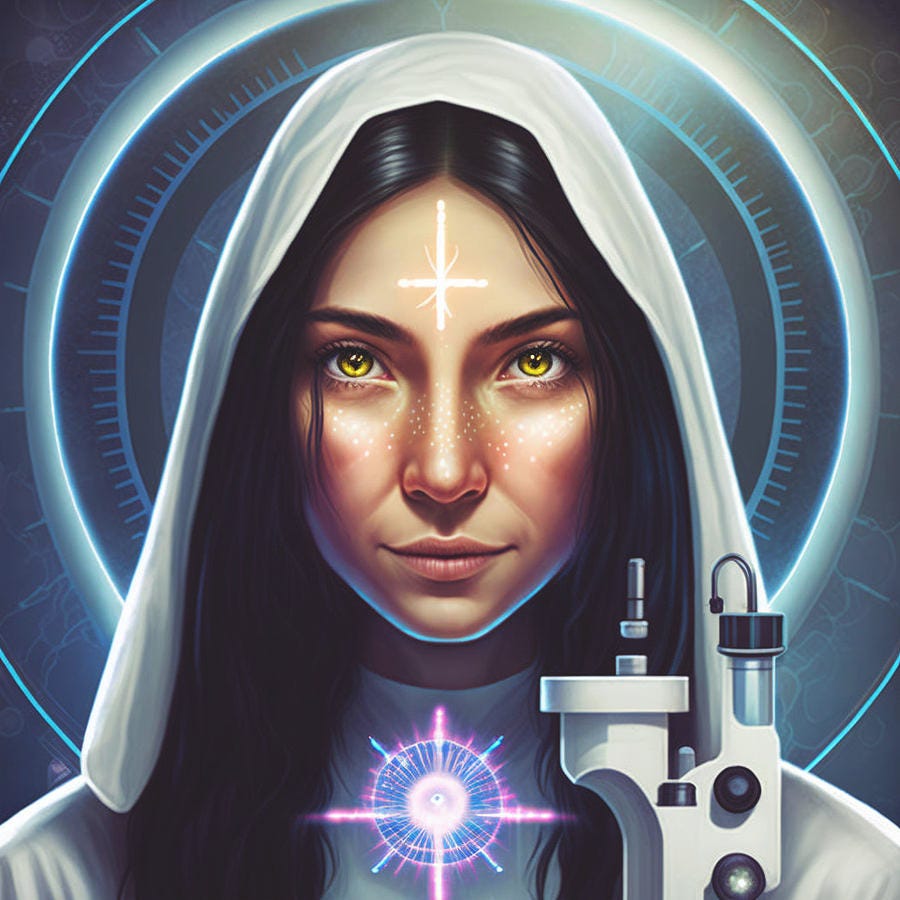
Our Lady of the Perpetual Biohack
Bryan Johnson has two aims in life - “don’t die” and “become the next evolution of human being.” You might imagine that he’s a fringe figure or hope that he’s receiving highly supportive mental health treatment, possibly focusing on delusional thinking. You’d be wrong on both counts.
Bryan Johnson - tech entrepreneur, venture capitalist, and biohacker - has millions of fans and followers. He’s created a “decentralized don’t die community” who are united in “defeating death and building prosperity.” Bryan didn’t get here overnight. It was a slow burn to become the most famous biohacker in the world. Technology poured gasoline on the fire.
His story is, arguably, one of transformation. Raised Mormon in Utah, his first transformation happened in childhood. He grew up “fat, or husky as my mom would say,” but turned his size into an asset and became a star football player in high school. Later, at 19, he served as a Latter-day Saint missionary in Ecuador. It was a miserable two years. He was sick all the time and returned home weakened and emaciated, 60 pounds lighter than he left. But this experience changed his outlook on life, and just a few years later, at age 24, he married and had his first child. He loved being a father, and with the responsibility of fatherhood, he wanted to create something that would make a difference. He saw digital technology as the most “powerful force in the universe” and built a mobile and web payment company that he sold in 2013 to PayPal for $800 million.
For many, this massive success would have been the final transformation. But Bryan was troubled by a nagging feeling of ‘what next’ and ‘what is this all for?’ He slid into a deep depression, “I look at pictures of myself from that period - I was smiling for the camera, especially because everyone wanted my opinions now that I was rich. But I look at my eyes in those pictures, and they show the truth. I was dead inside.”
It was time for Bryan to remake himself again. The husky kid became the football hero. The young missionary and father became the wildly successful entrepreneur. What next?
The answer came to Bryan when he realized he had what he called a “serious goal alignment problem:” The warring selves within him were blocking his ability to optimize his life. “Evening Self,” who wanted to overeat and stay up late, completely hijacked the goals of “Morning Self,” who wanted to sleep well and get up refreshed and prepared for the day. Bryan’s list of conflicting selves was interminable. The result was failure and guilt. So, he stopped putting faith in the self, in these mercurial desires and emotions. Instead he put his faith in data.
He let his body’s data manage his “life protocols:” what and when he ate, where and how long he slept, the amount and type of exercise he did, and the nature of his thoughts and feelings. To obtain these data, he became his own experimental subject. He spent millions a year to maintain a full-time medical team in his home so that he could become “the most measured human in history.” Every day became a parade of blood and stool samples, brain images, sleep metrics, daily erection counts, and measures of body fat, lung capacity, bone density, and heart rate.
In 2025, he claimed that his personal biodata revealed that his 46-year-old organs were operating at the capacity of an 18-year-old. “My workouts and hikes leave my teenage sons gasping for breath,” he boasts. Is this all for the glorification of Bryan Johnson? He claims not. “This is not about me. This is not about my life maximization. This is about species maximization. That’s why I’ve committed to one, singular goal: Don’t die.”
In one of his hundreds of YouTube videos, he tells us with missionary zeal, “The future can’t be imagined. Future people, people in the 25th century, if they could whisper one thing in our ear to set us on the best path to the future, it would be ‘Don’t die.’ Because when we believe death is not inevitable, we don’t kill ourselves. We don’t kill each other, and we don’t kill the planet.”
Not only that. Bryan believes, “My fight against death, my belief that someday, death will not be inevitable, will usher us into a new era.”
The Optimization Mindset
Optimize /ŏp′tə-mīz″/: Make as fully perfect, functional, efficient, or effective as possible.
Bryan Johnson epitomizes the optimization mindset. Optimization is an engineering concept. It’s the imperative to perfect input-output functions to maximize desired outcomes (e.g., profit) and minimize undesired ones (e.g., time spent). When applied to humans, optimization tells us to be efficient and productive, more, better, and faster forever. Success is a perpetual upgrade. Quantifiable metrics allow us to measure our success. In other words, The Good Life is optimized, like a well-oiled machine.
The optimization mindset is a way of seeing the world privileges self-improvement but really seems to be about fear. Caught in the optimization mindset, we become vigilant for threat and obsessed with fear of failure - failure of our bodies, mind, and our ability to achieve. We treat ourselves and our lives like problems to be solved and computers to hack. Through this mindset, we gain the illusion of control through the pursuit of efficiency, frictionlessness, perfection, and productivity.
Trickle Down Theory
If the biohacker’s true dream is constant progress and the ability to wield absolute control over body, mind, and spirit, you might be thinking - This has nothing to do with me. These guys are nuts. Do biohackers dream of electric sheep? Perhaps, but mainly when they’re in cryotherapy-assisted slumber.
Yet, the practices and attendant beliefs of the biohacker have already infiltrated our lives and shaped our views about the nature of wellbeing. They’ve trickled down to the rest of us. For example, we have a parade of experimental health technologies, the massive proliferation of GLP-1’s and cosmetic surgery, and a bigger tendency than ever to pop a pill for every problem. Not to mention - cryotherapy has arrived in a neighborhood near you.

It’s not just the hypochondriacal Howard Hughes types treating their imaginary illnesses, either - it’s your sister, your best friend, and your finance bro next door neighbor trying it out to reduce inflammation, do something about their chronic sore back, and finally beat that lingering depression. It’s poorly regulated, so it’s unclear how many have tried it. What is clear is that there’s almost no evidence at all that it helps.
Then there’s also the rapid spread of bio-tracking. Fitbits and other wearable fitness trackers measure heart rate, sleep, oxygen levels, blood pressures, steps, calories, and temperatures. These aren’t the tools of an obsessive fringe. They’re holiday presents for our 12-year-olds. The concept of personal data no longer needs explanation. We’re already figuring out how to monetize it, owning and selling it to achieve ‘data dignity’ so that corporations aren’t the only ones benefiting. We have acquiesced to the idea of data as identity. My data, my self.
It seems like all this is fundamentally about control. We all crave control, perhaps more than ever. Websites that track the frequency of words identify ‘control’ as a top 300 word (wordcount.org ranks it at 294). To compare, the word ‘love’ ranks at 384.
Biohackers keep us focused on control via the promise of brain training. The entrepreneur, speaker, and ‘brain coach’ behind Limitless: Upgrade Your Brain, Learn Anything Faster, and Unlock Your Exceptional Life, Jim Kwik, says “change your brain, change your world.” Kwik teaches us the equivalence, “brighter brain, brilliant life” and that we can be the ‘B.O.S.S.’ of our brains to remember things better by controlling our beliefs, observations, strategies, and states. These paeans of control and brilliance are just a few of the dozens of aphorisms, acronyms, and mnemonics that have made him an in-demand speaker, podcaster to millions, and coach to the rich and famous.
The ideas of measurement and control are right on-brand for the wildly popular Stanford neuroscience professor, podcaster, and social media influencer Dr. Andrew Huberman. Daily, to his millions of followers, Huberman elucidates health tools, minutely detailed health protocols, and biobehavioral processes through which we can manage every aspect of our stress, benefitting even at the cellular level. That’s why, as he says, ‘I love mechanism.’ He’s even a proponent of optimized procreation - through controlled medical procedures like IVF, not the old-fashioned way, thank you very much. One can exert more control when procreation involves a lab. Huberman shows us that science is indeed the new rock ‘n roll. He fans and followers are legion, including ‘Huberman Husbands’ (men who optimize) and (mostly female) TikTok users who tag him #DaddyHuberman.
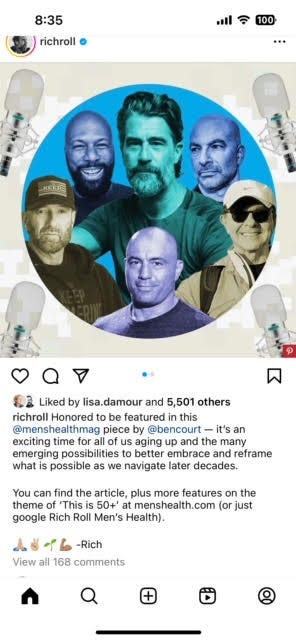
It’s not just Huberman. There’s a whole ruling class of biohacking influencers on social media, all dudes who teach their gazillion followers how to shoot for peak performance on a daily basis through practices like food-refusing soylent chugging, punishing exercise routines, and spartan lifestyles - all while giving you 20% off on Athletic Greens! Their love language is that of metabolic health, nutritional biochemistry, and centenarian decathlons.
The problem is that these influencers are driving optimization into dangerous territory: instead of persistence, they model obsessive striving; instead of growth, they model absolute control and progress for progress’ sake.
Here’s the point. The spread of biohacking doesn’t just affect the online followers of tech-bros trying to defeat death, neuroscientists-turned-social-media-influencers, and lifestyle Spartans. It’s being packaged for all of us, whether we’re working moms who life hack with magic mushrooms or any of the dozens of people you know who are the first in line for the newest dermatological treatment, lip plumper, hair extension, or news GLP-1 cocktail. Biohacking comes in many shapes and sizes. The shared belief is clear: wellbeing is the result of control over the body and mind, and a Good Life is one that is measured and fine-tuned to be as efficient, effective, and frictionless as possible.
Yet, we’re finding that achieving this level of tracking, measurement, and control is coming at the price of the very thing we’re chasing after so desperately: a sense of wellbeing.
The first step to getting back to human is stepping off this optimization hamster wheel.